Solar panels: what a UK roof generates, what a system costs and when it pays back
A solar system is sized in kilowatts peak and paid for in kilowatt hours. How quickly it pays back depends less on the panels than on which way the roof faces and how much of the electricity you use yourself.
We'll tell you whether it suits your property before anyone tries to sell you one.
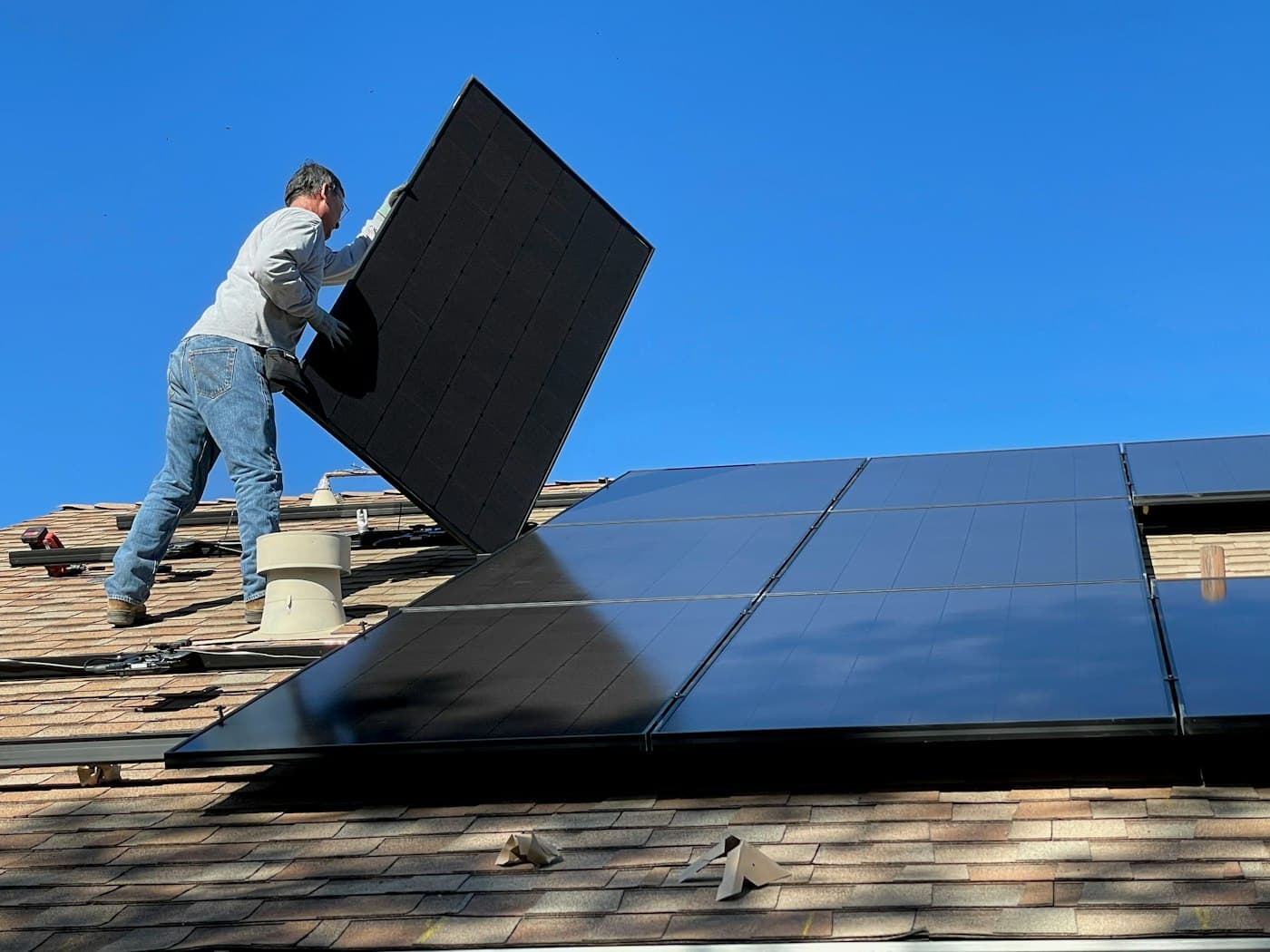
Installed cost
£8,000–£10,000
What the EPC method allows for panels, the same for every home — not a quote
Annual generation
3,000–4,700 kWh
A 4 kWp roof facing south, from the dullest council to the sunniest
Used in the home
20–40%
Share consumed on site without a battery or diverter
Panel lifespan
25 years or more
Inverters usually need replacing before the panels do
Illustrative. Used in the home and panel lifespan are placeholders. The rest are worked out from published data, as their notes say.
The short answer
On an unshaded roof in good condition, solar is a slow but dependable return, especially if you use the electricity as it is generated. On a shaded or worn roof, in a house empty all day, the payback stretches past the inverter's life.
We don't sell solar panels, and no installer pays to appear here. If the answer for your home is no, the page will say so.
Usually worth it if
- South, east or west roof with little shading
- Someone at home, or an EV charging, during the day
- Roof being recovered anyway, so the scaffolding is up
Probably not yet if
- Roof due for replacement within the next few years
- Chimney or tall trees shading the best pitch
- Northern Ireland home whose supplier pays nothing for exports
Is it worth it?
What an array earns a year at the published cap and export rates, how long it takes to pay for itself, and what happens to that answer when the self-use assumption moves.
Read itHow much will it make?
Modelled generation by system size, roof direction and month, from PVGIS. The table every other figure on these pages is built from.
Read itDo I need permission?
Roof-mounted panels are permitted development on most homes. The exceptions are listed buildings, conservation area frontages and anything going in the garden.
Read it
Costs
What it costs
Most of the price is panels, inverter, mounting and labour, but scaffolding, a steep or awkward roof, in-roof mounting and any tile or felt repairs move it a long way. The EPC method allows one figure for any home, which is the installed cost above; installers quote below it, and these are the bands we expect to see until real quote data replaces them.
2.5 kWp facing south, about 6 panels
Installed cost
£4,000–£6,000
- Value a year
- £420
- Payback
- 9–14 years
4 kWp facing south, about 10 panels
Installed cost
£5,000–£8,000
- Value a year
- £670
- Payback
- 7–12 years
4 kWp facing east or west, same house
Installed cost
£5,000–£8,000
- Value a year
- £540
- Payback
- 9–15 years
6 kWp facing south, about 14 panels
Installed cost
£7,000–£11,000
- Value a year
- £1,010
- Payback
- 7–11 years
4 kWp in-roof, facing south
Installed cost
£7,500–£12,000
- Value a year
- £670
- Payback
- 11–18 years
Illustrative. The installed costs are placeholders until quote data arrives, and the paybacks divide them by the value beside them. That value is real: PVGIS generation for the size and direction, 35% of it used in the house at the cap's 26.3p a unit and the rest exported at Outgoing Octopus's 12p. Use more of it yourself and the value rises.
The homes
What the certificates say about solar panels
Every energy certificate in England and Wales records what the assessor found and lists what would raise the rating. Counted up, they show how many homes are still waiting for this.
Certificates recommending panels
66.4%
Of homes, on their latest certificate
Panels on the certificate
1.6%
Of homes where it says, mostly lodged before any went up
Recommending a battery
Under 0.1%
Of homes; only certificates from 2025 on suggest it
| Measure | Recommended to | The EPC method's cost |
|---|---|---|
| Solar panels | 66.4% of homes | £8,000–£10,000 |
| Battery | Under 0.1% of homes | £500–£5,000 |
From the EPC register to 9 September 2026, each home's latest certificate, England and Wales. A certificate recommends what would raise its rating, by the rules of the year it was lodged. The method's cost is the range the middle recommendation was given, the same for every home: a guide, not a quote.
Who has it
How many homes already have solar, and where the sun is
The sunniest weather station is Eastbourne. The most panels per household are in the South West.
Homes with solar
1.7M
UK domestic installations to Jul 2026
Domestic capacity
7 GW
About 4.0 kW per home
New homes a month
15,952
Average over the last 12 months
Homes getting solar each month
New UK domestic installations, two years to Jul 2026.
Peak: Jul 19,812
The latest months are usually revised up as late registrations arrive.
Solar per 10,000 households
Installations of every size to date, by region and nation.
- South West1,108
- Wales1,075
- East of England917
- Scotland898
- East Midlands896
- South East801
- North East775
- Yorkshire and The Humber688
- West Midlands663
- North West591
- Northern Ireland491
- London237
Includes panels on businesses and farms, not only homes.
What a kilowatt of panels makes a year
kWh from 1 kWp facing south at a 35° pitch, by region and nation.
- South East1,071
- East of England1,050
- South West1,036
- London1,028
- East Midlands994
- West Midlands975
- Wales968
- Yorkshire and The Humber964
- North East951
- North West910
- Northern Ireland896
- Scotland858
The same panels facing east or west make about 79% of that. PVGIS models each council's centre and this averages them.
Hours of sunshine a year
Met Office stations, 1991 to 2020 average.
- Eastbourne1,889
- Manston1,793
- Hurn1,690
- Whitby1,625
- Oxford1,615
- Camborne1,611
- Heathrow1,597
- Valley1,575
- Waddington1,571
- Ross-On-Wye1,570
- Aberporth1,554
- Yeovilton1,524
- Leuchars1,498
- Sheffield1,469
- Tiree1,423
- Shawbury1,392
- Bradford1,320
- Armagh1,281
- Stornoway1,174
- Eskdalemuir1,107
- Lerwick1,103
A panel in Eastbourne sees 71% more sun than one in Lerwick.
DESNZ solar photovoltaics deployment; households from DESNZ estimates; Met Office historic station data; PVGIS (European Commission Joint Research Centre), 2005 to 2023 weather, 14% system losses.
Grants
What you can claim, nation by nation
There is no general solar grant for owner-occupiers anywhere in the UK. What exists is a zero VAT rate, export payments in Great Britain, and targeted schemes for lower-income households. We will show what applies at your address, the date it was last checked, and a link to the rules.
England and Wales
- Smart Export Guarantee
- ECO4
- 0% VAT on installation
The Smart Export Guarantee requires larger suppliers to pay something for every unit you export, but each sets its own rate and you can take an export tariff from a different supplier to the one that bills you. Installation carries a zero VAT rate, and ECO4 can fund solar for some low-income households. We will publish the current export rates and the date we checked them.
Scotland
- Smart Export Guarantee
- Home Energy Scotland loan
- 0% VAT on installation
The Smart Export Guarantee and the zero VAT rate work the same way as in England and Wales. On top of that, Home Energy Scotland offers an interest-free loan towards solar and storage, with an uplift for eligible rural postcodes. We will publish the current loan limits with their source date.
Northern Ireland
- 0% VAT on installation
- NI Sustainable Energy Programme
The Smart Export Guarantee does not cover Northern Ireland, so being paid for exported units depends on what individual suppliers choose to offer, and the choice is narrower. The zero VAT rate does apply, and the supplier-funded NI Sustainable Energy Programme is targeted at lower-income households.
What exporting pays today
The Smart Export Guarantee obliges larger suppliers to offer something above zero; it does not say how much. These are the rates we read from Octopus Energy's published tariffs on 17 September 2026, averaged over the fourteen regions.
- Agile Outgoing Octopus
- 14.7p average
- Outgoing Octopus
- 12p
Other suppliers' rates are in the electricity guide's export table, and are the published figures we have checked rather than a live feed. You can take an export tariff from a supplier who doesn't bill you.
Scheme rules change. Each one will carry the date we last checked it against Ofgem and GOV.UK.
Your property
Will it suit your home?
The answer turns on how your home was built, not on what the product can do in a brochure.
Which way the roof faces
South is best, but east and west roofs still work and spread generation across the morning and evening. A pitch of roughly 30 to 40 degrees suits the UK; flat roofs need ballasted frames, which changes the cost.
Shading
A chimney, a neighbour's tree or a dormer can cut output far more than its shadow suggests, because shading one panel can drag down a whole string. Optimisers or micro-inverters help, and add to the price.
How much roof you have
Each panel takes roughly two square metres and contributes about 0.4 to 0.5 kWp. Hips, valleys, dormers and vent pipes cut the usable area, so the system that fits is often smaller than the roof looks.
Roof condition and age
Panels last decades, so a roof that needs recovering in five years should be done first. Scaffolding goes up for the installation either way, and paying for it twice is the avoidable cost here.
When you use electricity
Exported units are worth less than the ones you use yourself, so self-consumption is what actually pays. Running the washing machine, an immersion diverter or an EV charger during the day changes the numbers more than an extra panel does.
Certification and connection
An MCS-certified installation is what makes you eligible for an export tariff. Your installer also has to notify the local network operator: smaller systems can be registered after commissioning, larger ones need permission first.
In progress
What lands on this page next
Some of this page is built from published data now. Still to come, in order:
- Generation for your own roof and postcode, not your council's average
- Cost bands from real quotes, by system size and region
- A self-consumption estimate built from your household's usage pattern
- Export rates from every large supplier, not only the one whose API we read
- How the payback changes if you add a battery, a diverter or an EV charger
Where the answers come from
- EPC Register — roof construction, floor area and any existing panels
- PVGIS and Met Office irradiance data — expected generation by postcode
- Ofgem and supplier tariffs — Smart Export Guarantee rules and current rates
Questions
Common questions
How much will solar panels generate where I live?
The south of England gets more sunlight than the north of Scotland, but the gap is tens of percent, not multiples: Eastbourne, the sunniest Met Office station, averages about 1,890 hours of sunshine a year against about 1,100 in Lerwick (1991–2020). Roof direction and shading make more difference than latitude.
Do I get paid for the electricity I export?
In Great Britain, the Smart Export Guarantee obliges larger suppliers to offer a tariff for exported units, and you need an MCS-certified system and a meter that can read export half-hourly. Northern Ireland is not covered, so payment there depends on individual supplier offers. Rates vary widely, so we will publish current ones with their source date.
Do I need planning permission for solar panels?
Most roof-mounted panels on houses are permitted development, subject to limits on how far they project from the roof plane. Listed buildings, conservation areas, flats and some new-build estates with restrictive covenants have extra conditions, and the detailed rules differ between the four nations.
Is in-roof mounting better than on-roof?
In-roof panels replace the tiles and sit flush, which looks tidier and is often preferred on new builds or a roof being recovered anyway. On-roof mounting is cheaper, runs slightly cooler and is easier to work on later. On an existing roof in good condition, on-roof is the usual choice.
What maintenance do solar panels need?
Very little. UK rain keeps most panels clean enough. The two jobs worth budgeting for are bird proofing — pigeons nest in the gap under the panels and the mesh is far cheaper fitted at installation than afterwards — and an inverter replacement, typically needed once during the panels' life.
Should I add a battery at the same time?
It depends on your tariff more than on the panels. A battery lets you keep evening use on your own generation instead of exporting it cheaply, and on a time-of-use tariff it can also store cheap off-peak electricity. Fitting both together saves some labour and scaffolding.
See whether solar panels suit your home
Start with your postcode and we'll work from what is already known about the property.