Heating controls: the cheapest way to cut a heating bill in almost any home
Most homes are running a heating system that works, but works badly: a boiler set far hotter than it needs to be, radiators with no valves, and a timer nobody has changed in years. Fixing that costs less than any other upgrade on this site.
We'll tell you whether it suits your property before anyone tries to sell you one.
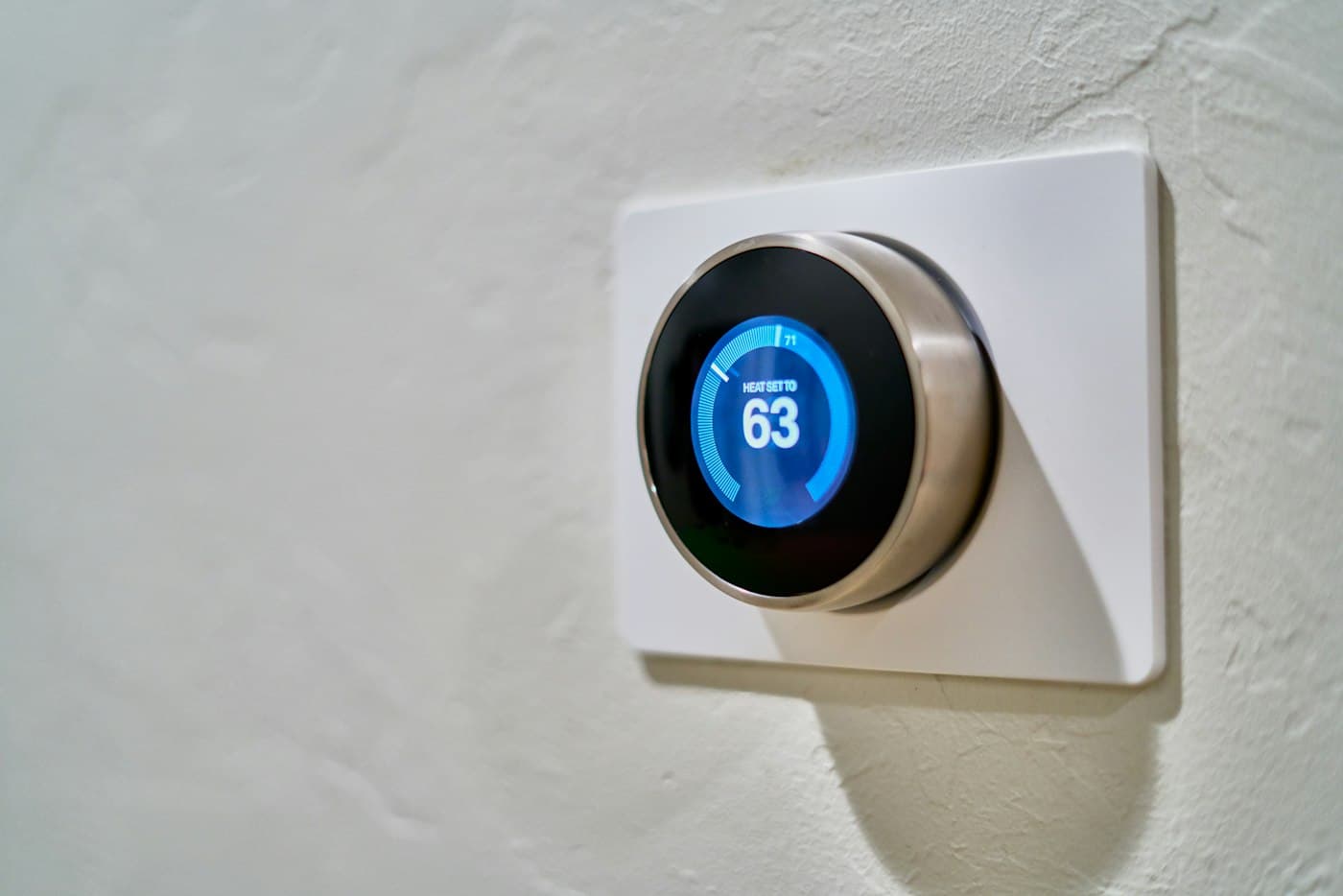
Typical spend
£0–£400
From a free setting change to a fitted smart thermostat
Flow temperature turn-down
5–10% less gas
Combi boilers running hotter than they need to
Time on site
Half a day
Most jobs, if no pipework has to be drained
Illustrative. Placeholder figures to show what this page will hold. Real ranges arrive with the quote and performance data behind them.
The short answer
Almost every gas-heated home has something here worth doing, and turning the flow temperature down costs nothing at all. What not to expect is a smart thermostat paying for itself in a house already heated to a tight schedule.
We don't sell heating controls, and no installer pays to appear here. If the answer for your home is no, the page will say so.
Usually worth it if
- Condensing boiler still set at the factory flow temperature
- Radiators with no thermostatic valves, or valves seized solid
- Empty house heated all day on an old timer
Probably not yet if
- Heat pump home, where deep setbacks cost more
- Draughty rooms where sealing the gaps comes first
- Small flat where zoning costs more than it saves
Costs
What it costs
Controls are the one part of a heating system where a small amount of money still moves the bill. How much depends entirely on how the house is heated now — good controls badly used save nothing — so we show what the work costs and leave the saving until metered data can support one.
Turning the boiler flow temperature down
Cost
£0
TRVs fitted to the radiators that have none
Cost
£200–£450
Smart thermostat, supplied and fitted
Cost
£200–£400
Weather compensation sensor on a compatible boiler
Cost
£150–£400
Illustrative. Placeholder figures to show what this page will hold. Real ranges arrive with the quote and performance data behind them.
The homes
What the certificates say about heating controls
Every energy certificate in England and Wales records what the assessor found and lists what would raise the rating. Counted up, they show how many homes are still waiting for this.
No room thermostat
18%
Of homes with radiators
Recommended better controls
16.6%
Of homes, on their latest certificate
Recommended cylinder work
7.8%
Of homes, on their latest certificate
Heating controls
Share of homes in England and Wales, as the certificate found it.
- Thermostat and TRVs60.7%
- Thermostat, no TRVs14.3%
- TRVs, no thermostat12%
- No thermostat or TRVs4.5%
- Storage heater controls4.7%
- Heater thermostats only3.9%
Thermostatic radiator valves without a room thermostat still leave the boiler firing when the house is warm.
| Measure | Recommended to | The EPC method's cost |
|---|---|---|
| Heating controls | 16.6% of homes | £220–£250 |
| Hot water cylinder | 7.8% of homes | £20–£40Up to £180 on a bigger job |
From the EPC register to 9 September 2026, each home's latest certificate, England and Wales. A certificate recommends what would raise its rating, by the rules of the year it was lodged. The method's cost is the range the middle recommendation was given, the same for every home: a guide, not a quote.
Grants
What you can claim, nation by nation
Controls are rarely funded on their own. They turn up as part of a wider package, or they come free with a boiler replacement because building regulations require them. The zero VAT rate on energy-saving materials does cover central heating and hot water controls, and now applies across the whole UK — we will publish the current rule and the date we checked it.
England and Wales
- ECO4
- 0% VAT on energy-saving materials
- Boiler Plus (England)
ECO4 can include controls as part of a whole-house package for eligible households rather than as a standalone measure. Separately, Boiler Plus means a new gas boiler fitted in England must come with time and temperature control plus one of flue gas heat recovery, weather compensation, load compensation or a smart thermostat — so a boiler replacement is the cheapest moment to get better controls.
Scotland
- Warmer Homes Scotland
- Home Energy Scotland advice
Warmer Homes Scotland installs controls alongside heating and insulation work for households in fuel poverty. Home Energy Scotland gives free advice on settings and can point at the current grant and loan package, which is aimed at heating systems rather than controls alone.
Northern Ireland
- Affordable Warmth Scheme
- NI Sustainable Energy Programme
Controls are funded here as part of a heating upgrade under income-tested schemes rather than on their own. The zero VAT rate on energy-saving materials was extended to Northern Ireland and now matches the rest of the UK.
Scheme rules change. Each one will carry the date we last checked it against Ofgem and GOV.UK.
Your property
Will it suit your home?
The answer turns on how your home was built, not on what the product can do in a brochure.
Almost every home has something to gain
Unlike a heat pump or solid wall insulation, this does not depend on the fabric of the building. If you have a condensing boiler, a thermostat and radiators, at least one of the changes on this page applies to you and several cost nothing.
Flow temperature is the free one
A condensing boiler only condenses — and only reaches its rated efficiency — when the water coming back from the radiators is cool enough. Many are left at the factory setting of 70–80°C. Dropping the heating flow temperature towards 55–60°C on a combi costs nothing, though the house takes longer to warm up and the setting has to go back up if rooms stop reaching temperature.
What your boiler will talk to
Weather compensation needs an outdoor sensor and a boiler that will accept one. Load compensation and modulating control usually need OpenTherm or the manufacturer's own protocol. A simple on-off thermostat throws that away, so check the boiler's capability before buying a control.
Room thermostat and TRVs together
TRVs set the target in each room; the room thermostat tells the boiler when to fire. They need to be in different rooms — a TRV in the same room as the thermostat will shut the radiator off and leave the boiler running for a room that never warms up.
Zoning only pays in larger homes
Splitting upstairs and downstairs onto separate motorised valves and thermostats costs real money in labour. It pays where parts of the house are genuinely unused for long stretches. In England, homes over 150 m² are required to have separate space heating zones anyway.
Hot water is a separate decision
If you have a cylinder, heat it on a timer for the hours you actually use it rather than all day. Do not simply turn the cylinder thermostat down: stored water needs to reach 60°C regularly to control legionella. A combi has no store, so only the heating side of these settings applies.
In progress
What lands on this page next
Some of this page is built from published data now. Still to come, in order:
- Which controls your home is likely to have already, read from its EPC record
- A flow temperature guide for your specific boiler model, with the setting screens
- Metered savings from UK field trials rather than manufacturer claims
- Whether a smart thermostat pays back for your household pattern, or just adds an app
- Which controls your boiler will actually communicate with, by make and model
- Fitted prices from real quotes, and installers covering your postcode
Where the answers come from
- EPC Register — existing heating controls recorded by property
- UK field trials and metered studies — measured savings from controls and flow temperature
- Building regulations and Boiler Plus — the controls required with a new boiler in each nation
- Manufacturer documentation — which boilers support weather and load compensation
Questions
Common questions
Do smart thermostats actually save money?
Sometimes. The saving comes from heating the house for fewer hours and to a lower temperature, not from the app itself. A household that already runs tight schedules may save very little; one that heats an empty house all day will save a lot. Trial results vary widely for that reason, which is why we will publish measured ranges rather than a headline number.
What should I set my boiler flow temperature to?
For a combi in a reasonably insulated home, 55–60°C for the heating side is a common starting point, leaving the hot water setting alone. Turn it down in steps over a few cold days and check every room still reaches temperature. If it does not, put it back up — a cold house is not a saving.
What is the difference between weather and load compensation?
Weather compensation uses an outdoor sensor to lower the flow temperature when it is mild outside. Load compensation uses the gap between the room temperature and the target to do something similar from indoors. Both keep the boiler modulating at a lower temperature instead of cycling on and off, and both need a boiler that supports them.
Do I need a TRV on every radiator?
On every radiator except the one in the room with the room thermostat, and not on a designated bypass radiator if your system uses one. Old valves seize open or shut, so a valve that will not turn is worth replacing even though it looks fine.
Is turning the thermostat down by a degree worth it?
It is one of the few changes with a consistent effect, because heat loss scales with the difference between inside and outside. Whether a degree is comfortable is your call — draught-proofing first makes a lower setting easier to live with.
Are the controls different with a heat pump?
Yes, and the usual advice reverses. A heat pump is designed to run continuously at a low flow temperature with weather compensation doing the work, so deep setbacks and aggressive scheduling usually cost more rather than less.

See whether heating controls suit your home
Start with your postcode and we'll work from what is already known about the property.