Plug-in solar: a panel you plug into the wall
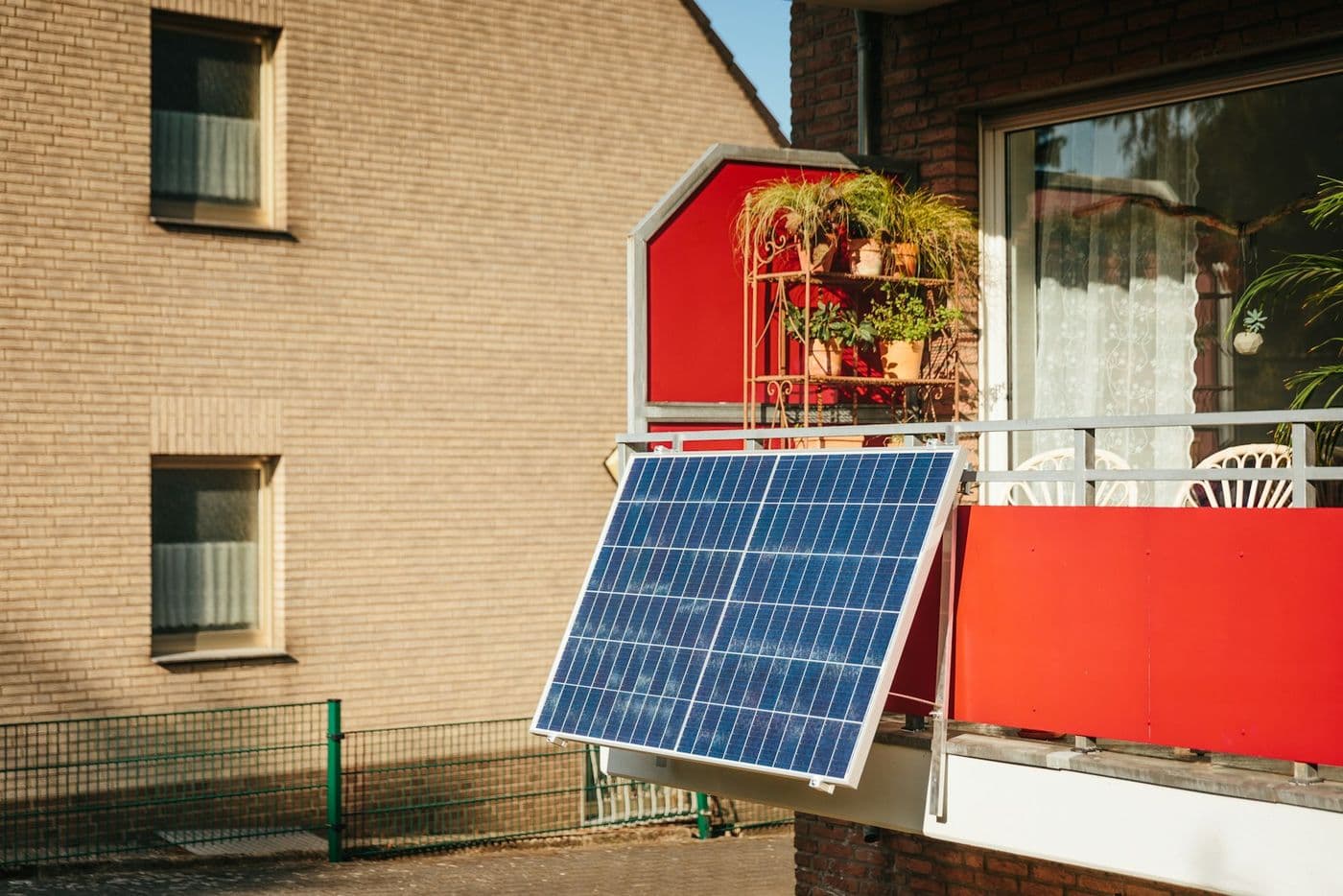
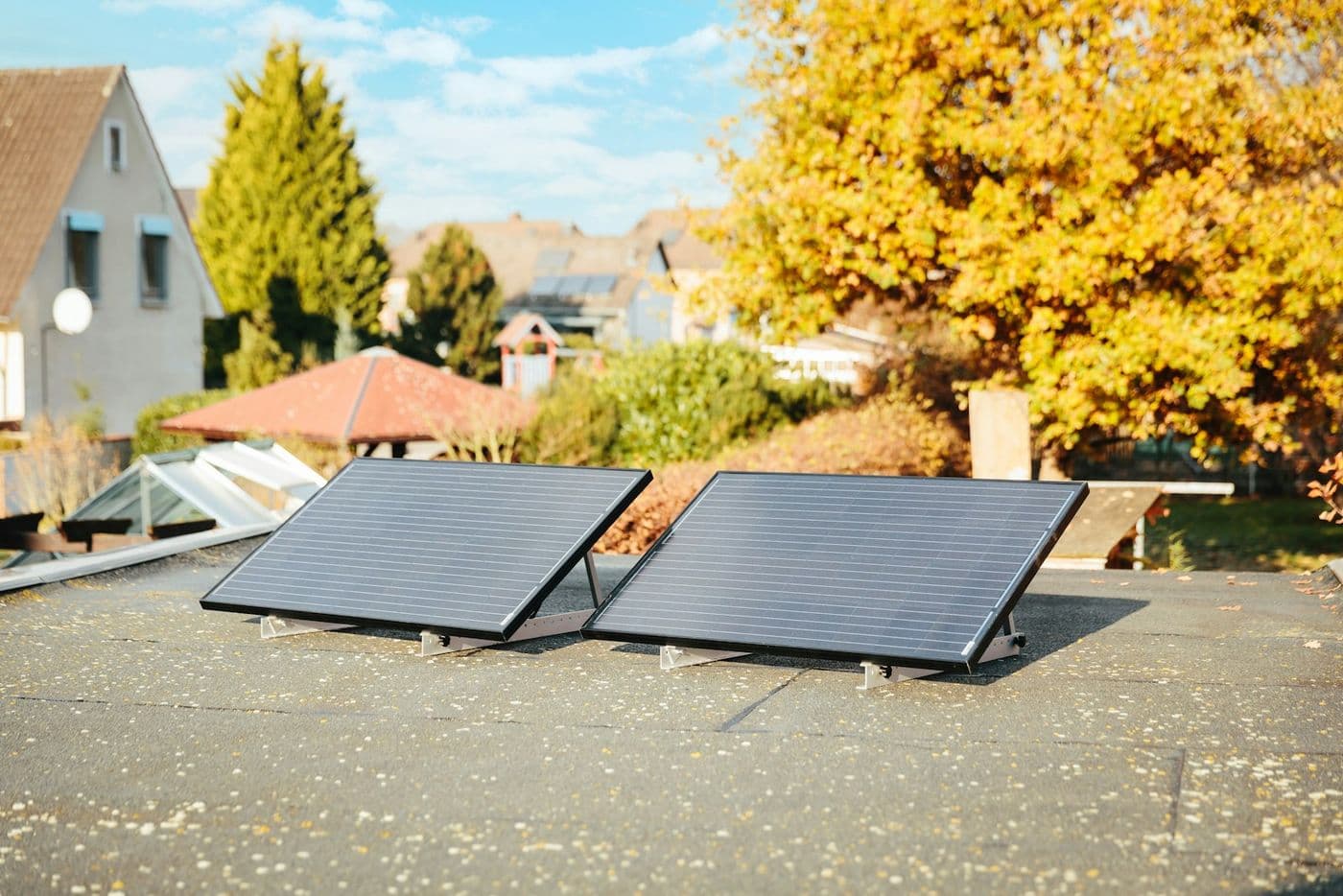
Since 27 August 2026, a solar kit of up to 800 watts can hang on a balcony, a wall or a garden stand and plug into an ordinary socket in England, Scotland and Wales. No installer, no scaffolding.
Your free home report reads your home's energy certificate: its roof, its rating and what it could reach.
Got a roof? Get quotes for rooftop panels →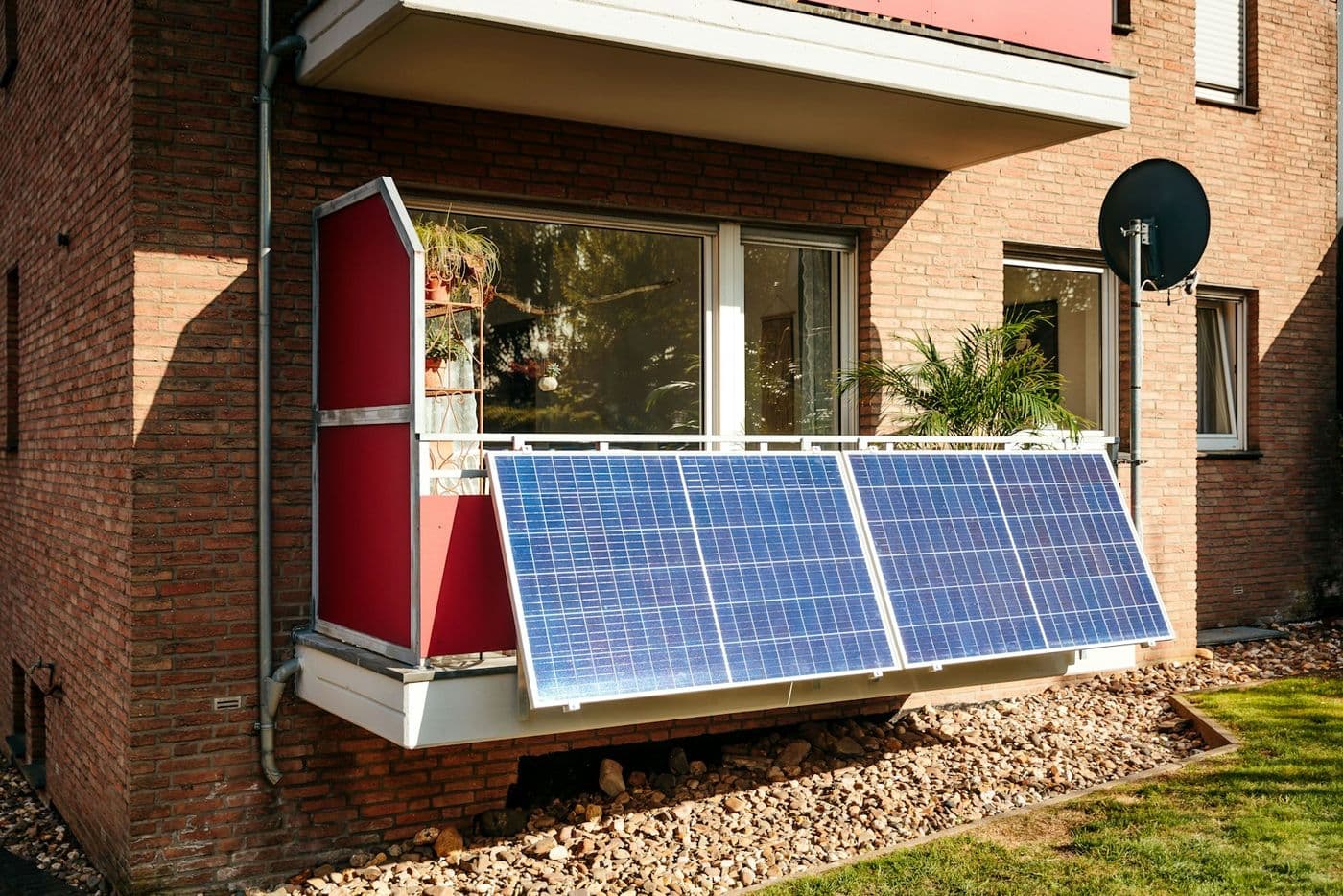
800 W
the most a kit may feed into the socket
The short answer
Legal and worth a look if you rent, live in a flat or have no roof to use. An 800 W kit takes something off every bill; a rooftop array does several times more.
- a year from 800 W facing south
- 793 kWh
- a year from 800 W facing south
- off the bill a year, using 60% of it
- £125
- off the bill a year, using 60% of it
- kWh a year, from Scotland to the South East
- 690–860
- kWh a year, from Scotland to the South East
- for what it spills to the grid: no export tariff without MCS
- £0
- for what it spills to the grid: no export tariff without MCS
England
Legal since 27 August 2026
Scotland
Legal since 27 August 2026
Wales
Legal since 27 August 2026
Northern Ireland
Not yet: its own rules still apply
PVGIS (European Commission Joint Research Centre), modelled from 2005 to 2023 weather for 800 W of panels at a 35° tilt, for the centre of each of 361 councils. The 60% used at home is our assumption; the calculator below lets you move it.
How it works
How does plug-in solar work?
A plug-in kit is a small solar system that comes in a box. You fit it yourself, and it feeds power into the house through a socket rather than through the fuse box, which is the part that used to be illegal.
- the most panel a kit can carry
- 2,000 W
- the most panel a kit can carry
- the most it can feed the socket
- 800 W
- the most it can feed the socket
- kit per home, for now
- 1
- kit per home, for now
- 1
One or two panels
The same panels as on a roof. Up to 2,000 W of them, though the kit can only pass on 800 W.
- 2
A microinverter
A small box that turns the panels' DC into mains AC, and holds what it passes on to 800 W.
- 3
A three-pin plug
Straight into a wall socket. Never an extension lead, a multi-way adaptor or an RCD adaptor.
- 4
The house uses it first
The power goes to whatever is on: the fridge, the router, the kettle. Only what nothing needs goes to the grid.
It stops in a power cut
When the grid goes down the inverter switches off, so nobody working on the lines gets a shock. It won't keep your lights on.
The pins go dead when you unplug it
The specification makes the plug drop below 34 volts within a tenth of a second of leaving the socket.
No battery, for now
Kits with a battery, and plug-in batteries on their own, are outside the new rules.
What it saves
How much can plug-in solar save?
Three things decide it: which way the panel faces, how much of its output the house uses, and what you paid. Set them below.
We assume 60% of the output gets used in the house. Home a few days a week, or the washing machine on a timer for lunchtime.
Set it to the price you've seen. We don't track kit prices yet, so £500 is only somewhere to start.
Off your bill in a year
£125
Pays for itself in about 4 years at £500.
- Used in the house
- 476 kWh, worth £125
- Spilled to the grid
- 317 kWh, worth £0
Month by month
- J
- F
- M
- A
- M
- J
- J
- A
- S
- O
- N
- D
The saving peaks in summer: £16 in the best month against £4 in the worst.
The government puts it at up to £110 a year. Ours prices PVGIS output at a 35° tilt at the cap's 26.3p a unit; a panel hung upright on a railing makes less than that.
Facing south, the three households come to £94 (out all day), £125 (in some of the day), £167 (home most days) a year. The shares used at home are our assumptions, not measurements: nobody publishes metered self-use for plug-in kits in Britain yet. A unit is valued at the Ofgem price cap's GB average for a single-rate meter, 1 October 2026 to 31 December 2026. If you're on a cheaper tariff, the saving is smaller.
Using it
Where does the power go?
Mostly into the things that never switch off. A kit is small enough that much of what it makes disappears into the fridge, the freezer, the router and everything on standby.
That's why the share you use matters so much. What spills to the grid at noon earns nothing. Running the washing machine or the dishwasher while the sun is up is the cheapest way to catch more of it.
A sunny day with an 800 W kit
What the kit makes, hour by hour, against what a household draws.
- Used in the house
- Spilled to the grid, unpaid
- Bought from the grid
A drawing of the shape, not a measurement. What it shows holds for any kit this size: the always-on load takes a steady slice all day, and the midday peak is the part that spills unless something is running.
Where it goes
Where can you put a plug-in solar panel?
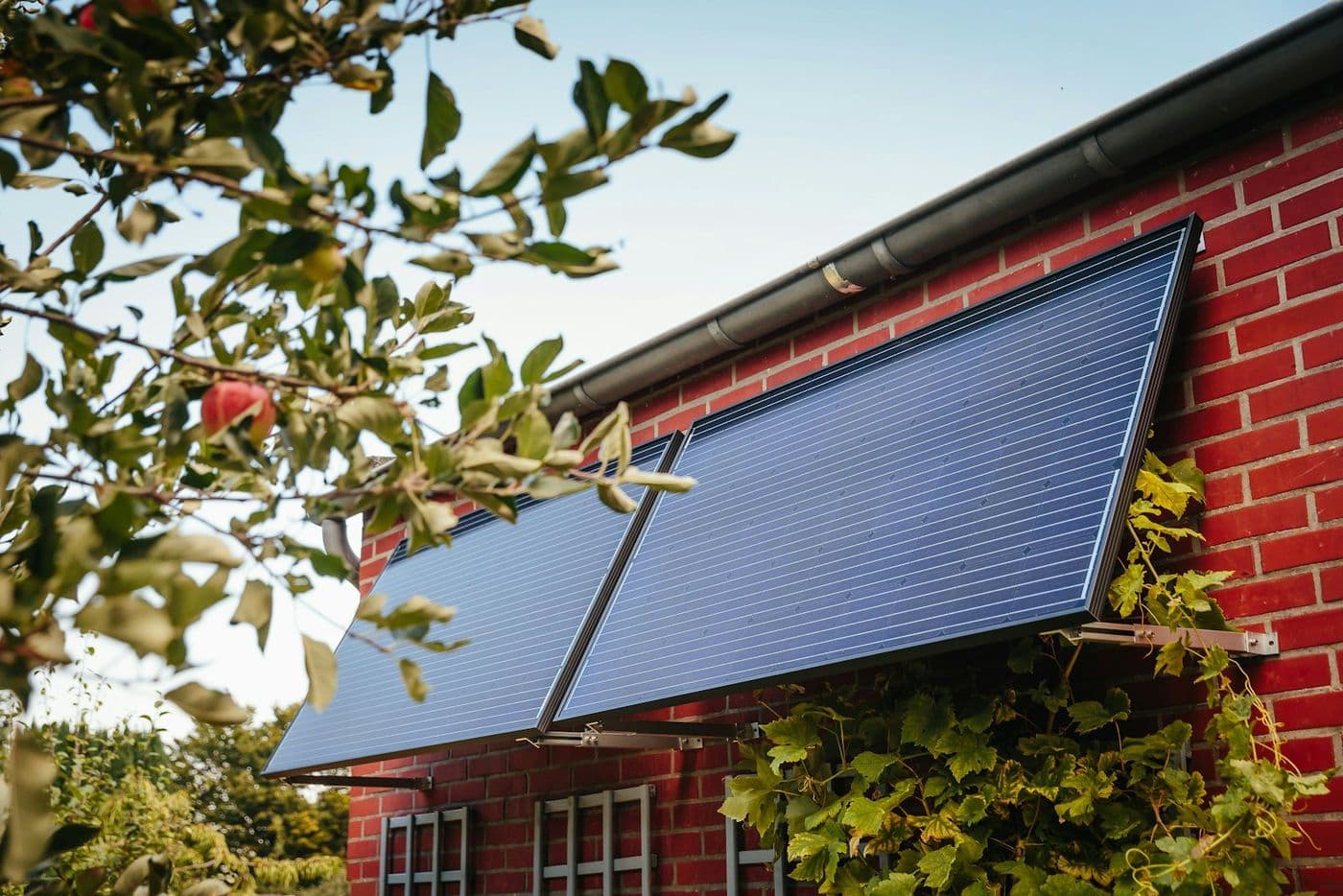
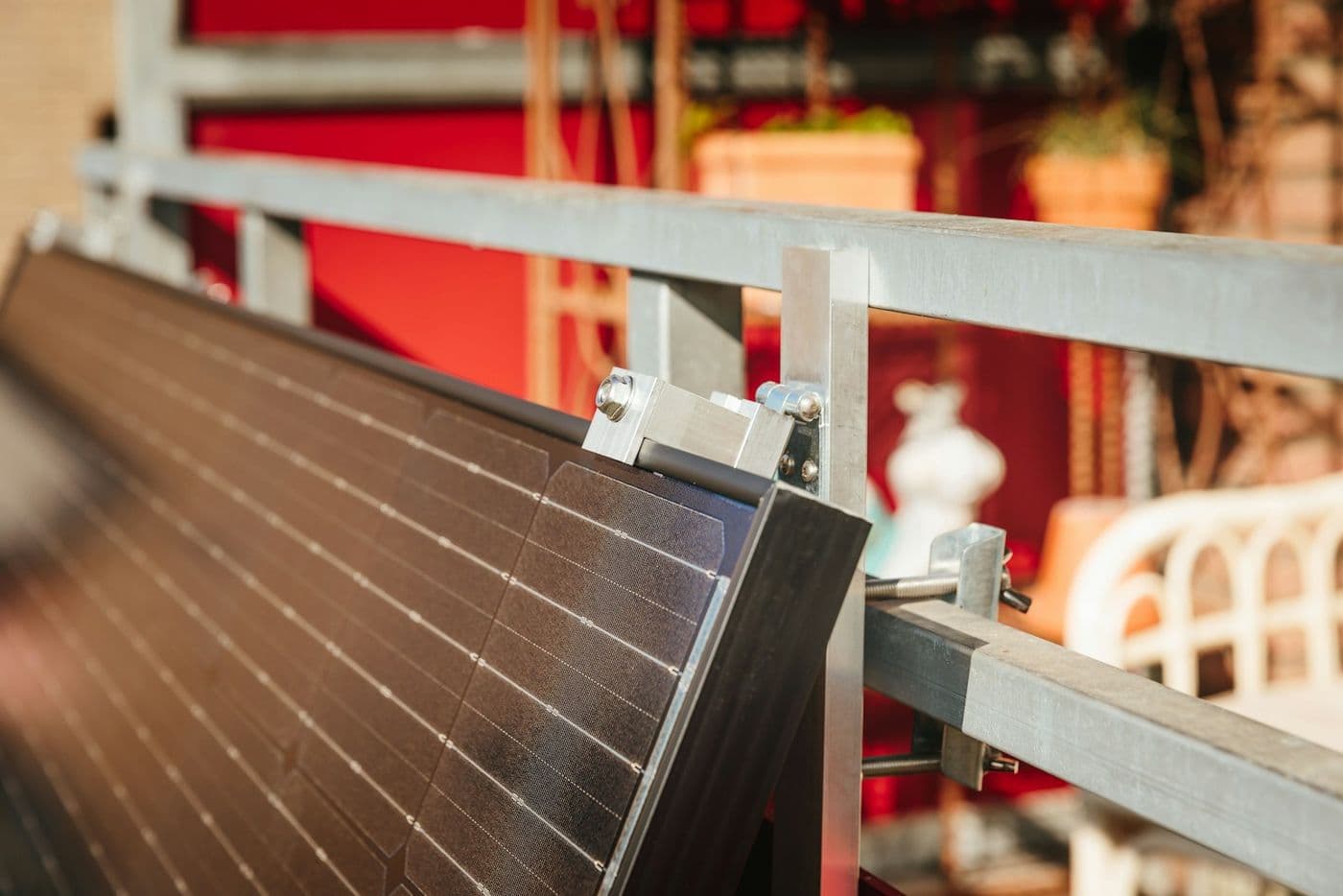
A railing, a wall, a stand or a shed roof: anywhere the sun reaches and the maker's mounting kit is designed for. The fixing has to come off again without a professional's tools, and mustn't harm the building's structure, fire safety or weatherproofing.
A balcony railing
Metal or masonry, with the maker's brackets.
An outside wall
Your own wall, not one shared with next door.
A stand in the garden
Ballasted or pegged, never dug in.
A flat or shed roof
Held down for wind, and taken off without tools.
A timber balcony
Ruled out by the specification, with timber cladding.
Never on these
- Timber balconies, and timber, aluminium or metal composite, or high-pressure laminate cladding
- Any building having its external walls or cladding made safe
- A wall shared with the home next door
- Anywhere it narrows an escape route or could spread a fire to a neighbour's balcony
Ask before you fix it
- Renting, or in a flat? Your landlord, freeholder or managing agent, and who pays if anything needs doing.
- Listed, or in a conservation area? The council, for listed building consent or planning.
- Your home insurer, and the building's, before it goes up.
The rules
Is plug-in solar legal in the UK?
In England, Scotland and Wales, since 27 August 2026. Until then the rules on plugs didn't allow a plug to feed power into a socket. Two sets of regulations were amended and a product specification was written, built on Germany's standard for the same kits.
24 March 2026
The government says plug-in solar will be in shops within months.
16–30 June
A two-week consultation on the plug rules and a product specification.
July
The response: 88% of those answering backed letting kits use a normal plug.
27 August
Legal to plug in across England, Scotland and Wales.
800 W
The most it may feed in
An inverter capped at 800 VA and 3.5 amps, whatever the panels behind it.
2,000 W
The most panel on one kit
Above 960 W of panel, the specification says to have your wiring assessed first.
1
Kit per home, for now
The specification allows one per circuit, but the grid's connection rules (G98) still say one per household until they're changed.
0
Adaptors or extension leads
Straight into a wall socket in good condition. No trailing leads, multi-way blocks or RCD adaptors.
Northern Ireland has its own electricity safety regulations and its own version of the connection rules (G98/NI). The government has said a decision there is for the Northern Ireland department responsible.
Before you buy
Start at the fuse box
The rules assume modern protection on the circuit a kit plugs into. That's the one check you can't work around, and it takes a minute: open the cupboard and look.
Look at the consumer unit. Switches mean you can carry on. Fuses you pull out mean an electrician first.
A row of switches: carry on
Circuit breakers you can flip, with residual current protection (an RCD, or RCBOs on each circuit). Press the test button first: it should trip.
Pull-out fuses: call an electrician first
Old rewireable fuses have no switches and no residual current protection. The specification says to have the installation checked, and upgraded if need be, before a kit goes anywhere near it.
Pick the socket
A wall socket in good condition, on a circuit with no other plug-in kit. Switch breakers off one at a time to find which sockets share a circuit, and ask an electrician if you can't tell.
Pick the spot
The sunniest place the kit's brackets are rated for, below the maximum height in its instructions, with a short, protected run of cable to the socket.
Get the say-so
Landlord, freeholder or managing agent if it isn't all yours; the council if the building is listed; and your insurer.
Buy a compliant kit
It should say it complies with the plug-in solar Interim Product Specification, and appear on the Energy Networks Association's Type Test Register. Be wary of marketplace imports that don't.
Tell the network, and label it
Telling your distribution network operator when you connect it, and when you take it down, is mandatory; the kit comes with a QR code to the form. Stick its label on the consumer unit so the next electrician knows, and test the RCD's button now and then.
Or rooftop?
Plug-in solar or rooftop panels?
If you own the house and the roof is usable, rooftop panels make five times as much and get paid for what they export. Plug-in is for everyone that sentence leaves out.
| Compare | Plug-in kit | Rooftop array |
|---|---|---|
| Size | Up to 800 W, one or two panels | About 4 kWp, around ten panels |
| A year facing south | 793 kWh | 3,967 kWh |
| Cost | The price of the kit | £8,000–£10,000 fitted, the EPC method's figure |
| Who fits it | You, following the kit's instructions | An MCS-certified installer, with scaffolding |
| Paid for exports | No: export tariffs need an MCS certificate | Yes, 12.0p a unit on Outgoing Octopus |
| A battery | Not with it | Can be added |
| If you move | Unplug it and take it | Stays with the house |
Plug-in suits you if
- You rent, or live in a flat with a balcony
- The roof is shaded, the wrong shape, or not yours to use
- You'd like to try solar without scaffolding or an installer
- You might move, and want to take it with you
Rooftop suits you if
- You own the house and plan to stay a while
- There's a roof slope facing anywhere from east round to west
- You'd like a battery, or to be paid for what you export
Free, from up to 3 installers who cover your postcode. They pay us a fee; you don't have to go ahead.
The data behind this page
What an 800 W kit makes, month by month and region by region
An 800 W kit is a fifth of a typical rooftop array, and it makes a fifth as much. Where it faces moves the total by less than people expect; the summer moves it by more.
An 800 W kit facing south, month by month
kWh generated, averaged over every council PVGIS models.
Peak: May 99
June makes about 3.9 times what December does. A kit bought in October takes a winter to show what it can do.
By the way it faces
kWh a year from the same 800 W kit.
North isn't modelled. A north-facing balcony gets little direct sun, and a kit there is a poor buy.
The same kit, region by region
kWh a year facing south, and what 60% of it used at home is worth.
Each council inside a region counts once. PVGIS models the centre of every council, so a large region averages over a lot of ground.
80%
What a kit in Scotland makes, against the South East
About the same as turning a panel from south to east, which keeps 79%.
A panel hung upright makes less than these
PVGIS models panels tilted at 35°, the way a garden stand or a flat-roof frame holds them. A panel hung flat against a railing or a wall stands upright, catches the low winter sun well and the high summer sun badly, and makes noticeably less over a year. We don't publish an upright figure yet; tilt the panel if the brackets allow it.
Where this comes from
- Department for Energy Security and Net Zero: Plug-in solar, government response to the consultation, July 2026.
- Plug-in Solar Device Interim Product Specification, final version, 2026.
- GOV.UK announcement, 27 August 2026: the legal date, the 800 W limit and the government's savings figure.
- PVGIS, European Commission Joint Research Centre: monthly generation by council and direction.
- Ofgem: the price cap's unit rate, which values a unit used at home.
Last checked against these sources on 22 September 2026.
Questions
Common questions about plug-in solar
Is plug-in solar legal in the UK?
In England, Scotland and Wales, yes, since 27 August 2026, for kits that meet the government's Interim Product Specification: up to 800 W into the socket and up to 2,000 W of panel. Northern Ireland has its own electricity rules, and they haven't been changed yet.
How much does plug-in solar save?
An 800 W kit facing south makes about 793 kWh a year, modelled by PVGIS. Priced at the Ofgem price cap, that's roughly £94 a year if you're out all day and £167 if someone is home most days, because only what the house uses saves anything. The government's own figure is up to £110.
Is plug-in solar worth it in Scotland or the north of England?
It makes less, but not by as much as people expect. Modelled by PVGIS, an 800 W kit facing south makes about 690 kWh a year in Scotland, against 860 kWh in the South East. Which way the panel faces, and whether anything shades it, matter as much as where it is.
Do I need an electrician to fit plug-in solar?
Not to fit the kit: it's designed to be put up and plugged in by the householder. You do need modern protection in the consumer unit (circuit breakers with an RCD or RCBOs). If yours has old pull-out fuses, or you can't tell which sockets share a circuit, the specification says to get an electrician in first.
Can I plug a solar panel into an extension lead?
No. A compliant kit plugs straight into a wall socket. Extension leads, multi-way adaptors, travel adaptors and RCD adaptors are all ruled out, and the plug itself carries that warning.
Can I use plug-in solar if I rent?
The rules allow it, but the landlord's permission is still needed, and in a flat the freeholder's or managing agent's too. The specification tells makers to say so in the instructions, and to agree who pays for anything that needs doing before the kit goes up.
Do I need to tell anyone I've installed plug-in solar?
Yes: your distribution network operator, the company that runs the local wires. Notifying it when you connect the kit and when you take it down is mandatory, and a compliant kit comes with instructions and a QR code for it. Tell your home insurer too.
Will I be paid for the electricity I export?
Almost certainly not. Smart Export Guarantee tariffs need the installation to hold an MCS certificate or an equivalent, and a kit you fit yourself won't have one. Plan on the spill earning nothing, and use as much as you can while the sun is up.
Does plug-in solar work in a power cut?
No. The inverter switches off when the grid goes down, so it can't feed power into lines someone may be repairing. Kits with batteries, which could, aren't covered by the new rules.
Can I have more than one plug-in solar kit?
Not yet. The specification allows one kit per circuit, but the network connection rules (G98) still limit a home to one until they're amended.
Own the house and have a roof you could use? The solar panels guide covers rooftop arrays, and the output page has the generation figures behind this one.
Got a roof you could use as well?
A rooftop array is around 5 times the size of a plug-in kit, and it gets paid for what it exports. Start with your postcode: your free report reads the home's energy certificate.
Free, from up to 3 installers who cover your postcode. They pay us a fee; you don't have to go ahead.